Blog

Posts Tagged ‘GeoWebCache’

OpenGeo Suite 2.4.4 released

The OpenGeo team is excited to announce the release of OpenGeo Suite 2.4.4. This is the first new version in a few months so there have been lots of stability improvements and updates.

GeoServer incorporates the new features from the recently released GeoServer 2.1.3. It now has Basic HTTP authentication for cascaded WMS servers, a feature that has been asked for by a number of our clients. GeoServer also has support for non-advertised layers, with layers configured and active, yet not publicized in the capabilities documents. For our European friends, we’ve made enhancements to the View Service for the GeoServer INSPIRE extension.

The GeoServer-embedded GeoWebCache now has a significantly improved UI, exposing many options previously only configurable via a text editor. It’s now possible to add a new layer, configure tile size, view disk quotas, enable GWC services and cache formats.

GeoExplorer has improved stability when deployed under Glassfish and WebSphere containers. Logout functionality has now been exposed, based on many user requests. In general, GeoExplorer now has a faster loading of JavaScript resources.

The OpenGeo Suite is and continues to be 100% open source and we’ve migrated the source code onto GitHub to improve our development process and make it easier for anyone to check out our source code.

We invite everyone to check out our new release—register for a trial of the Enterprise Edition or download the free (but unsupported) Community Edition. If you’re looking for support, unlimited bug fixes, access to core developers, updates, telephone support, and even custom development hours, we invite you to consider becoming an OpenGeo Suite Enterprise Edition client.

Thanks to everyone who submitted bug reports and feature requests. Thanks as well to all developers involved in our component projects. Finally, thanks to our current Enterprise Edition clients, who enable to us to continue to develop the best geospatial software.
OpenGeo Gallery Part 4

Another week, another wing added to the OpenGeo Gallery. As always, we showcase applications from around the world built using some or all of the the software components we help to develop: PostGIS, GeoServer, GeoWebCache, OpenLayers, and GeoExt. These range from small-scale applications to national deployments. See for yourself.

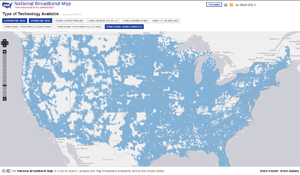
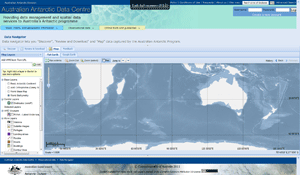
We start out down under with the Australian Antarctic Data Navigator, showing observational data from the Australian Antarctic Division using a GeoExt client and served through GeoServer and GeoWebCache. Next up, our friends at the Ordnance Survey in the UK have built an interesting WMS Map Builder using OpenLayers that serves from their horde of national data. Somewhat closer to our home office, the State of Oklahoma has its own broadband map, similar to the National Broadband Map that we’ve highlighted here in the past. Finally, the World Health Organization hosts the International Travel and Health Map, a lightweight application that shows health risks on a per-country basis.

We’re nowhere near done yet—thanks to everyone who has sent in your applications.

Enter the OpenGeo Gallery

OpenGeo Gallery Part 3

The OpenGeo Gallery keeps on growing, with more and more exciting real-world applications showcasing the software we help develop: PostGIS, GeoServer, GeoWebCache, OpenLayers, and GeoExt.

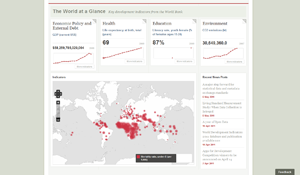
This week, we present some high profile sites. Most notably, we have the World Bank Open Data site, a portal to access all public statistical and demographic data served by the World Bank, whose viewer contains an integrated OpenLayers client. We also have Protected Planet, a United Nations-related mapping website.hat uses PostGIS and GeoServer to provide information and media on protected areas across the world. Additionally, we have have added OpenStreetMap in a Box, an easy-to-install portable installation of OpenStreeMap data utilizing OpenLayers. Finally, our friends at AppGeo contributed their MapGeo Parcel Viewer, which leverages the entire OpenGeo Suite to provide local governments, businesses, and the public easy access to local maps and detailed property information.

Keep those entries coming! We want the OpenGeo Gallery to be the premier destination for showcasing the best live, real-world, open source geospatial applications.

See the OpenGeo Gallery

OpenGeo Gallery Redux

Last week we introduced the OpenGeo Gallery, a place where we showcase live applications that make use of GeoServer, OpenLayers, and other software that OpenGeo develops and supports.

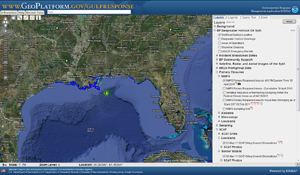
This week, we have added a few more entries, many with a government or NGO focus. Starting close to home, we have NYCityMap, New York City’s official online map portal. Aiming further south, there is GeoPortal Gulf Response, which tracks information related to the oil spill in the Gulf of Mexico. Finally, and not at all south, we have the Norwegian National Mapping Authority’s official online Norway Map (Norgeskart).

We invite you to enter the Gallery and wander around. We’ll be showcasing more applications in the weeks to come.

Introducing the OpenGeo Gallery

Of all the questions we are commonly asked, who is using your software? ranks pretty highly.

While we publish numerous case studies about clients who have built applications directly with us, there are many more organizations that have built amazing projects using software that underlies the OpenGeo Suite, namely PostGIS, GeoServer, GeoWebCache, OpenLayers, and GeoExt.

In hopes of better publicizing these projects, we have created the OpenGeo Gallery to showcase the best applications built using software that we support. Whether you are interested in all examples together in one place or just some highlighted examples, the OpenGeo Gallery highlights some great organizations making use of cutting-edge technology.

As time goes on, we hope to add to the Gallery and showcase some of those applications here on the blog. If you know of an application using the OpenGeo Suite or any of its components and wish to have us publicize it on our website./p>

View the OpenGeo Gallery

GeoWebCache 1.2.4 released

Congratulations to the GeoWebCache development team on the release of GeoWebCache 1.2.4!

Although development has continued consistently, benefiting GeoServer users and those who downloaded nightly builds, it’s been almost a year since the previous release.

The new features since the last release are numerous, including a new disk quota module for automatic managing of tile storage. The disk quota prevents runaway disk usage, removes the need for manual truncation operations, and allows for multiple policies for determining how to remove tiles from the cache.

Also, GeoWebCache can now serve tiles from an ArcGIS Server tile cache, allowing a preexisting tile cache to be easily migrated to a fully standards-compliant web mapping stack without the need for re-creation. You now also have the ability to configure the service metadata for the capabilities document.

Finally, the documentation has received a much-needed update (with a nightly-updated version), the codebase has been refactored, and the source code migrated to git (hosted on GitHub).

Since GeoWebCache doesn’t get discussed very often, a little background might be in order. The tile cache server is the unsung hero of the geospatial software stack, performing its duties in a transparent way such that one doesn’t often notice it. This is a pity, since using GeoWebCache is an imperative in any production-ready web mapping system that utilizes Java. When you have hundreds of users requesting millions of tiles, GeoServer (and other robust servers running WMS) can handle that kind of load, but it makes no sense to do so. Since the data is often static, the requests are often duplicates. Since tiles are stored for later use, GeoWebCache eliminates the need for duplicate WMS processing. By placing GeoWebCache as a proxy in front of a WMS one can separate servers between public and private networks, increasing security as well as performance. In short, if you’re running GeoServer in production, you should be using a tile cache. Might we humbly recommend GeoWebCache for this purpose.

Thanks to Gabriel Roldan, Arne Kepp, Miles Jordan, and everyone else who has contributed to this new release.

GeoWebCache featured in Directions Magazine

OpenGeo’s Arne Kepp was interviewed by Directions Magazine regarding the recent release of GeoWebCache 1.0 .
This article is a fine, layperson’s introduction to the features and benefits of GeoWebCache, and we highly recommend giving it read.

GeoWebCache is a WMS tile-caching solution written in Java, and is a core component of the OpenGeo Stack, although it can operate against any compliant Web Map Service (WMS) implementation. Directions Magazine “publishes weekly newsletters about geographic information systems, global positioning systems, desktop mapping, cartography, computer-aided design, remote sensing, web services, and more.”