Blog

Posts Tagged ‘geoserver’

OpenGeo Suite 2.4.4 released

The OpenGeo team is excited to announce the release of OpenGeo Suite 2.4.4. This is the first new version in a few months so there have been lots of stability improvements and updates.

GeoServer incorporates the new features from the recently released GeoServer 2.1.3. It now has Basic HTTP authentication for cascaded WMS servers, a feature that has been asked for by a number of our clients. GeoServer also has support for non-advertised layers, with layers configured and active, yet not publicized in the capabilities documents. For our European friends, we’ve made enhancements to the View Service for the GeoServer INSPIRE extension.

The GeoServer-embedded GeoWebCache now has a significantly improved UI, exposing many options previously only configurable via a text editor. It’s now possible to add a new layer, configure tile size, view disk quotas, enable GWC services and cache formats.

GeoExplorer has improved stability when deployed under Glassfish and WebSphere containers. Logout functionality has now been exposed, based on many user requests. In general, GeoExplorer now has a faster loading of JavaScript resources.

The OpenGeo Suite is and continues to be 100% open source and we’ve migrated the source code onto GitHub to improve our development process and make it easier for anyone to check out our source code.

We invite everyone to check out our new release—register for a trial of the Enterprise Edition or download the free (but unsupported) Community Edition. If you’re looking for support, unlimited bug fixes, access to core developers, updates, telephone support, and even custom development hours, we invite you to consider becoming an OpenGeo Suite Enterprise Edition client.

Thanks to everyone who submitted bug reports and feature requests. Thanks as well to all developers involved in our component projects. Finally, thanks to our current Enterprise Edition clients, who enable to us to continue to develop the best geospatial software.

OpenGeo Suite now on GitHub

The OpenGeo Suite team has migrated all of our source code over to Git from Subversion, and we are now hosting the code on GitHub. This follows the trend of lots of open source software projects toward a distributed version control system.

Switching from Subversion to Git has all sorts of benefits for the development team, as well for anyone interested in playing with the code. There are numerous sites that detail the advantages of Git (we particularly like this one), but it will allow us to more easily incorporate features for our clients, manage multiple release streams, and work simultaneously without breaking development for everyone else. As the client base of the OpenGeo Suite grows (and as more and more people download the free Community Edition) this change has been a long time in coming.

You can also visit OpenGeo’s main GitHub repository as well as the main repositories for GeoExplorer, GXP, and more. Please fork the code and play around. If you have patches, feel free to send us a pull request. While we can’t guarantee that all patches will be accepted, we value every suggestion we receive.

If you have thoughts about our svn to git conversion, we’d love to hear about in the comments section. Though please, no x-is-better-than-y wars. Each one of us is correct!

GeoServer and Teradata Geospatial

Teradata

OpenGeo recently added support for Teradata Geospatial to GeoServer, allowing full read and write capabilities to the database including the viewing, editing, and deleting of spatial features. The Teradata extension for GeoServer has been optimized specifically for Teradata databases, including support for Query Banding and Tessellation. With this added functionality, GIS and other visualization tools can interoperate with Teradata spatial data in real-time via standard web services.

The article, GeoServer and Teradata - Your Geospatial Data Served on the Web, authored by OpenGeo, provides step-by-step instructions on how to download, install, and configure GeoServer with Teradata. It also contains considerations specific to the Teradata database regarding configuration and set-up instructions. We also included how to connect popular visualization tools such as Google Earth and uDig to GeoServer to view and edit features in Teradata.

  • GeoServer and Teradata - Your Geospatial Data Served on the Web
  • GeoServer documentation - Teradata in GeoServer

Read the rest of this entry »

INSPIRE View Service and GeoServer

GeoServer has come a long way towards INSPIRE compliance in the past year. It has added support for Web Map Service (WMS) 1.3, enhancements towards Symbology Encoding (SE) 1.1, and there’s an upcoming implementation of Web Feature Service (WFS) 2.0.

Interested in helping GeoServer achieve full INSPIRE compliance through funding or development?

In March of this year, the European Commission published version 3.0 of the Technical Guidance document for INSPIRE View Services (based on ISO19128 / WMS 1.3). This mandates that countries within the European Union must implement the Initial Operating Capacity by May 9 and Quality of Service requirements by November 9.

There are two scenarios defined for implementation:

  1. The GetCapabilities document is extended with a link to a Catalogue Service for the Web (CS-W) for the ISO19119 Service Metadata
  2. Extra elements are embedded into the GetCapabilities document itself

The current implementation with GeoServer focuses on implementing only the first scenario and, although INSPIRE does not require multilingual support, is currently limited to only serving up in one language.

I recently investigated which issues remain for GeoServer to meet all of the requirements of the INSPIRE View Service 3.0 specification. I have listed the relevant issues here, along with links back to the GeoServer issue tracker:

  • While GeoServer does support adding keywords to the WMS GetCapabilities response, it does not yet support the optional vocabulary attribute, in which one can specify the thesaurus used. (#4658)
  • For each Coordinate Reference Systems (CRS) advertised for a layer, GeoServer must provide a corresponding BoundingBox element. (#4659)
  • AuthorityURL and Identifier are not yet supported but are required to link to the gmd:MD_Identifier from the Metadata for datasets (ISO19115). (#4491)
  • MetadataURL type does not support the value of ISO19115:2003. (#4595)

And finally, there are two minor issues that will only affect those certain highly-specific use cases:

  • The advertized LegendURL does not include a STYLE parameter. This only affects those cases where a View Service is configured with more than just the inspire_common:DEFAULT Style. (#4661)
  • The Cascaded attribute is not used by GeoServer when cascading other WMS services. This attribute needs to reflect the number of times a layer was cascaded. (#4662)

We hope to fix these issues soon to make GeoServer truly INSPIRE-compliant with respect to the View Service 3.0 specification.

OpenGeo Gallery Part 4

Another week, another wing added to the OpenGeo Gallery. As always, we showcase applications from around the world built using some or all of the the software components we help to develop: PostGIS, GeoServer, GeoWebCache, OpenLayers, and GeoExt. These range from small-scale applications to national deployments. See for yourself.

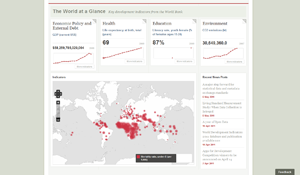
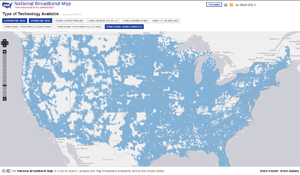
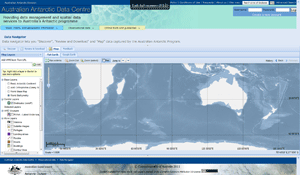
We start out down under with the Australian Antarctic Data Navigator, showing observational data from the Australian Antarctic Division using a GeoExt client and served through GeoServer and GeoWebCache. Next up, our friends at the Ordnance Survey in the UK have built an interesting WMS Map Builder using OpenLayers that serves from their horde of national data. Somewhat closer to our home office, the State of Oklahoma has its own broadband map, similar to the National Broadband Map that we’ve highlighted here in the past. Finally, the World Health Organization hosts the International Travel and Health Map, a lightweight application that shows health risks on a per-country basis.

We’re nowhere near done yet—thanks to everyone who has sent in your applications.

Enter the OpenGeo Gallery

OpenGeo Gallery Part 3

The OpenGeo Gallery keeps on growing, with more and more exciting real-world applications showcasing the software we help develop: PostGIS, GeoServer, GeoWebCache, OpenLayers, and GeoExt.

This week, we present some high profile sites. Most notably, we have the World Bank Open Data site, a portal to access all public statistical and demographic data served by the World Bank, whose viewer contains an integrated OpenLayers client. We also have Protected Planet, a United Nations-related mapping website.hat uses PostGIS and GeoServer to provide information and media on protected areas across the world. Additionally, we have have added OpenStreetMap in a Box, an easy-to-install portable installation of OpenStreeMap data utilizing OpenLayers. Finally, our friends at AppGeo contributed their MapGeo Parcel Viewer, which leverages the entire OpenGeo Suite to provide local governments, businesses, and the public easy access to local maps and detailed property information.

Keep those entries coming! We want the OpenGeo Gallery to be the premier destination for showcasing the best live, real-world, open source geospatial applications.

See the OpenGeo Gallery

GeoServer 2.1.0

GeoServer 2.1.0 was released late last week, after almost a full year of development work. You can read about the full details of all of the new features on the GeoServer Blog.

There are over a dozen new headline features, some of them quite large improvements: WMS 1.3, WMS Cascading, virtual services, GeoWebCache direct WMS integration. What do all of these new features have in common? They were all funded by organizations who are using GeoServer and want to see it develop and thrive. Some developments were made possible by OpenGeo, some by other commercial providers such as GeoSolutions and Refractions Research. A few were funded by OpenGeo Suite Enterprise Edition clients. All of these organizations may not have much in common operationally, yet their funding of this open source project has made a valuable software tool even more valuable for everyone.

We want to specifically thank those organizations who have contributed to GeoServer during this release cycle:

  • Ordnance Survey - WMS 1.3.0
  • MassGIS - WCS limits
  • OBIS - Layers from SQL
  • Landgate - Virtual Services
  • SWECO - SLD Unit of Measure, DPI scaling
  • Malmö City of Sweden - SLD Unit of Measure, DPI scaling
  • University of Perugia - WMS Cascading

As we reflect on this milestone, we should remember that GeoServer is everyone’s project. Whether you just play around and report a bug or are a state agency using GeoServer in production, you are part of a large and thriving community. Your work, and your funding, helps improve the software.

So the next time someone asks why one would pay for ‘free’ software, take a look at this list. GeoServer is yours—and your funding makes it happen.

Look for GeoServer 2.1.0 as part of the next version of the OpenGeo Suite, coming soon.

OpenGeo Gallery Redux

Last week we introduced the OpenGeo Gallery, a place where we showcase live applications that make use of GeoServer, OpenLayers, and other software that OpenGeo develops and supports.

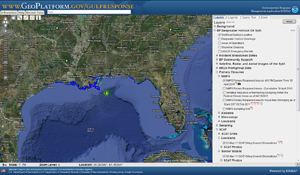
This week, we have added a few more entries, many with a government or NGO focus. Starting close to home, we have NYCityMap, New York City’s official online map portal. Aiming further south, there is GeoPortal Gulf Response, which tracks information related to the oil spill in the Gulf of Mexico. Finally, and not at all south, we have the Norwegian National Mapping Authority’s official online Norway Map (Norgeskart).

We invite you to enter the Gallery and wander around. We’ll be showcasing more applications in the weeks to come.

Introducing the OpenGeo Gallery

Of all the questions we are commonly asked, who is using your software? ranks pretty highly.

While we publish numerous case studies about clients who have built applications directly with us, there are many more organizations that have built amazing projects using software that underlies the OpenGeo Suite, namely PostGIS, GeoServer, GeoWebCache, OpenLayers, and GeoExt.

In hopes of better publicizing these projects, we have created the OpenGeo Gallery to showcase the best applications built using software that we support. Whether you are interested in all examples together in one place or just some highlighted examples, the OpenGeo Gallery highlights some great organizations making use of cutting-edge technology.

As time goes on, we hope to add to the Gallery and showcase some of those applications here on the blog. If you know of an application using the OpenGeo Suite or any of its components and wish to have us publicize it on our website./p>

View the OpenGeo Gallery

Ordnance Survey Agrees to OpenGeo Suite Enterprise Edition Contract

We just received word from Ordnance Survey, Britain’s national mapping agency, that they have agreed to an OpenGeo Suite Enterprise Edition contract to support their ongoing spatial data infrastructure initiatives. The OS OnDemand service from Ordnance Survey has recently adopted GeoServer as its primary Web Map Service to customers and the OpenGeo Suite contract will fund core development work for all GeoServer deployments to meet INSPIRE View Service requirements, including WMS 1.3.