September 30th
Congratulations to the OpenLayers development team on the release of OpenLayers 2.11!
This release is a big one, closing over 380 outstanding tickets and providing significant performance improvements. The biggest win is the mobile support enhancements. OpenLayers now allows features to be dragged and zoomed with touch gestures on mobile devices. Handlers for pinching and zooming have also been added to the library.
Other key highlights are the plethora of performance enhancements and the additional support for accessing Bing Maps tiles. The release notes go into detail about all of the new features and you can see them in action on the OpenLayers demo site—to really get a feel for the improvements open the demo in a mobile browser.
OpenGeo is committed to the OpenLayers project and we’re eager to support it however we can. A good deal of the development was done by OpenGeo team members Tim Schuab, Andreas Hocevar and Bart van den Eijnden in February as a part of the code sprint hosted by Camptocamp and Swisstopo. That week in Switzerland proved to be a critical step forward in pushing mobile enhancements and the 2.11 release to completion. A full recap of the sprint is accesible from Tim’s post on the OpenLayers blog.
Thanks again to the OpenLayers team, the supporters of the code sprint and everyone who has contributed to this new release!
May 26th
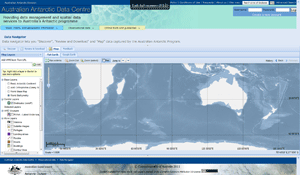
Another week, another wing added to the OpenGeo Gallery. As always, we showcase applications from around the world built using some or all of the the software components we help to develop: PostGIS, GeoServer, GeoWebCache, OpenLayers, and GeoExt. These range from small-scale applications to national deployments. See for yourself.
We start out down under with the Australian Antarctic Data Navigator, showing observational data from the Australian Antarctic Division using a GeoExt client and served through GeoServer and GeoWebCache. Next up, our friends at the Ordnance Survey in the UK have built an interesting WMS Map Builder using OpenLayers that serves from their horde of national data. Somewhat closer to our home office, the State of Oklahoma has its own broadband map, similar to the National Broadband Map that we’ve highlighted here
in the past. Finally, the World Health Organization hosts the International Travel and Health Map, a lightweight application that shows health risks on a per-country basis.
We’re nowhere near done yet—thanks to everyone who has sent in your applications.
Enter the OpenGeo Gallery
May 18th
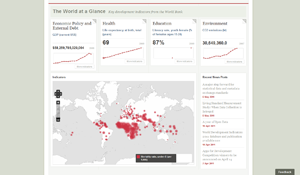
The OpenGeo Gallery keeps on growing, with more and more exciting real-world applications showcasing the software we help develop: PostGIS, GeoServer, GeoWebCache, OpenLayers, and GeoExt.
This week, we present some high profile sites. Most notably, we have the World Bank Open Data site, a portal to access all public statistical and demographic data served by the World Bank, whose viewer contains an integrated OpenLayers client. We also have Protected Planet, a United Nations-related mapping website.hat uses PostGIS and GeoServer to provide information and media on protected areas across the world. Additionally, we have have added OpenStreetMap in a Box, an easy-to-install portable installation of OpenStreeMap data utilizing OpenLayers. Finally, our friends at AppGeo contributed their MapGeo Parcel Viewer, which leverages the entire OpenGeo Suite to provide local governments, businesses, and the public easy access to local maps and detailed property information.
Keep those entries coming! We want the OpenGeo Gallery to be the premier destination for showcasing the best live, real-world, open source geospatial applications.
See the OpenGeo Gallery
May 13th
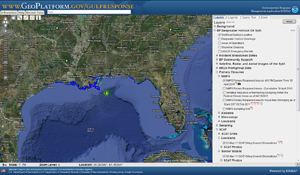
Last week we introduced the OpenGeo Gallery, a place where we showcase live applications that make use of GeoServer, OpenLayers, and other software that OpenGeo develops and supports.
This week, we have added a few more entries, many with a government or NGO focus. Starting close to home, we have NYCityMap, New York City’s official online map portal. Aiming further south, there is GeoPortal Gulf Response, which tracks information related to the oil spill in the Gulf of Mexico. Finally, and not at all south, we have the Norwegian National Mapping Authority’s official online Norway Map (Norgeskart).
We invite you to enter the Gallery and wander around. We’ll be showcasing more applications in the weeks to come.
May 3rd
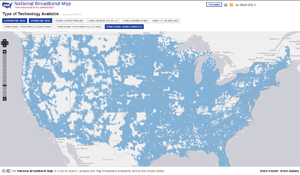
Of all the questions we are commonly asked, who is using your software? ranks pretty highly.
While we publish numerous case studies about clients who have built applications directly with us, there are many more organizations that have built amazing projects using software that underlies the OpenGeo Suite, namely PostGIS, GeoServer, GeoWebCache, OpenLayers, and GeoExt.
In hopes of better publicizing these projects, we have created the OpenGeo Gallery to showcase the best applications built using software that we support. Whether you are interested in all examples together in one place or just some highlighted examples, the OpenGeo Gallery highlights some great organizations making use of cutting-edge technology.
As time goes on, we hope to add to the Gallery and showcase some of those applications here on the blog. If you know of an application using the OpenGeo Suite or any of its components and wish to have us publicize it on our website./p>
View the OpenGeo Gallery