Blog

Posts Tagged ‘release’

PostGIS 2.0 Released

Today, after 26 months of development (for comparison, an elephant takes only 22 months to gestate a whole new elephant) PostGIS 2.0 was released!

There are a lot of user-visible changes, but it’s also hard to overstate how much changed under the covers: the storage format, the indexes, the parsers and emitters were all re-written. That is, all the code that formed the initial release of PostGIS back was swapped out. It’s all fresh and shiny under the hood. Here’s the official release announcement:

The PostGIS development team is super excited,
can hardly believe that they are actually doing this,
aren't maybe even sure that they are ready to make
this kind of commitment, not so young, and not when
we have so much more living to do, but:
PostGIS 2.0.0 is complete and available for download.
The development process for 2.0 has been very long,
but has resulted in a release with a number of exciting
new features.
 * Raster data and raster/vector analysis in the database
 * Topological models to handle objects with shared boundaries
 * PostgreSQL typmod integration, for an automagical
   geometry_columns table
 * 3D and 4D indexing
 * Index-based high performance nearest-neighbour searching
 * Many more vector functions including
   * ST_Split
   * ST_Node
   * ST_MakeValid
   * ST_OffsetCurve
   * ST_ConcaveHull
   * ST_AsX3D
   * ST_GeomFromGeoJSON
   * ST_3DDistance
 * Integration with the PostgreSQL 9.1 extension system
 * Improved commandline shapefile loader/dumper
 * Multi-file import support in the shapefile GUI
 * Multi-table export support in the shapefile GUI
 * A geo-coder optimized for free US Census
   TIGER (2010) data
We are greatly indebted to our large community of beta testers
who valiantly tested PostGIS 2.0.0 and reported bugs so we could
squash them before release time.
And also we want to thank our parents for making PostGIS possible.
Yours,
The PostGIS development team

In addition to all my colleagues on the PostGIS team, I’d like to also thank OpenGeo, who have given me the time to work on PostGIS over the past couple years.

 

OpenGeo Suite 2.4.5 released

We are excited to release a new version of the OpenGeo Suite! In order to capture the many improvements and bug fixes happening in the open source community, we are moving toward a more rapid release cycle. For example, GeoServer now has JDBC datastore session startup/teardown SQL comments, as well as support for paletted PNG images with alpha transparency.

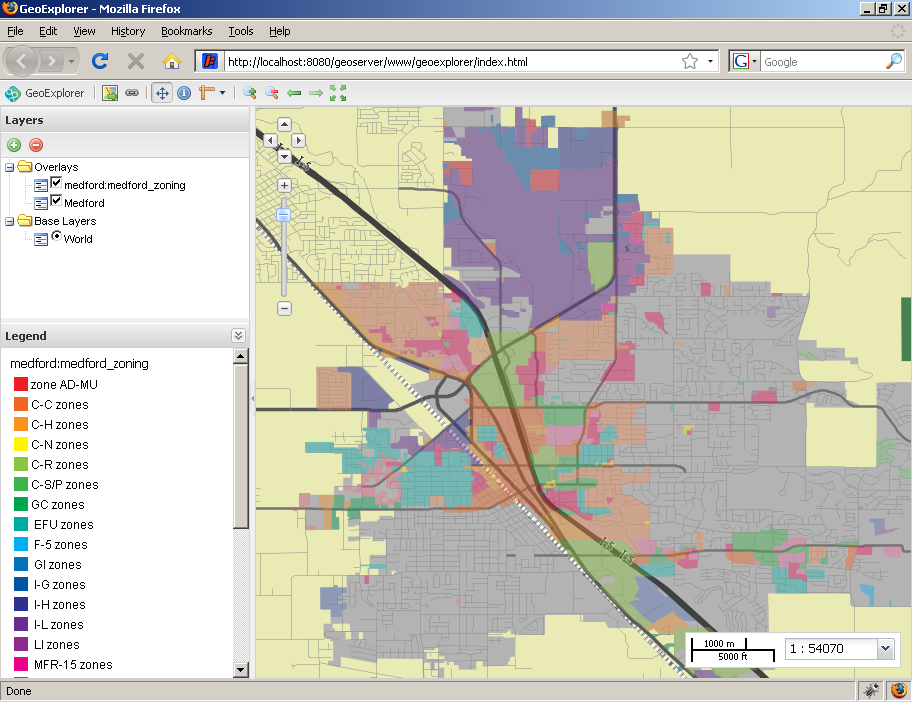
In GeoExplorer (which really is pretty amazing, if you haven’t seen it recently) there is now smoother tile display, including fade-in. Also, the map legend has now been integrated directly into the layer tree. Finally, we have changed the default base layer to be MapQest OSM, moving away from Google (though Google base layers are still available).

All of these new features are available in the Community Edition, Enterprise Edition (which includes a free 30 day trial of our support), and all Cloud Editions! Try any version you’d like

OpenGeo Suite Enterprise Edition 2.4.0 released

March comes in like a lion with a new OpenGeo Suite Enterprise Edition release! Most exciting are the new features, including:

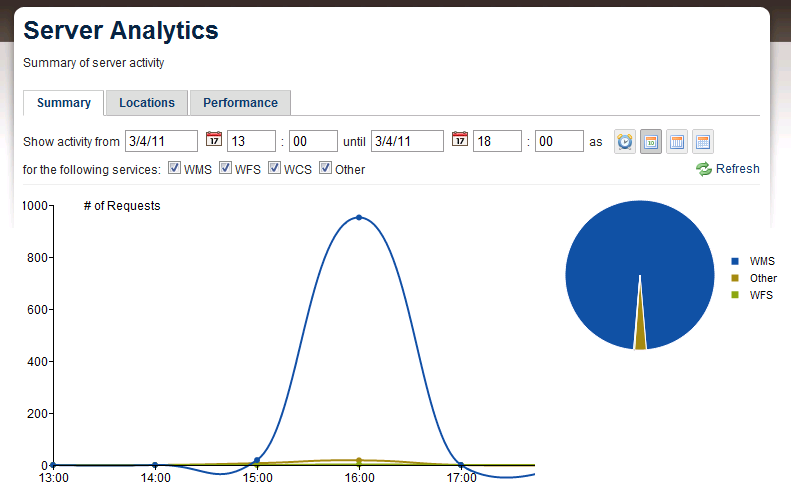
Suite Analytics, an interface that allows sysadmins to visualize and analyze server activity and performance. With this tool one can accurately measure traffic loads and use that information to properly configure and optimize server resources.

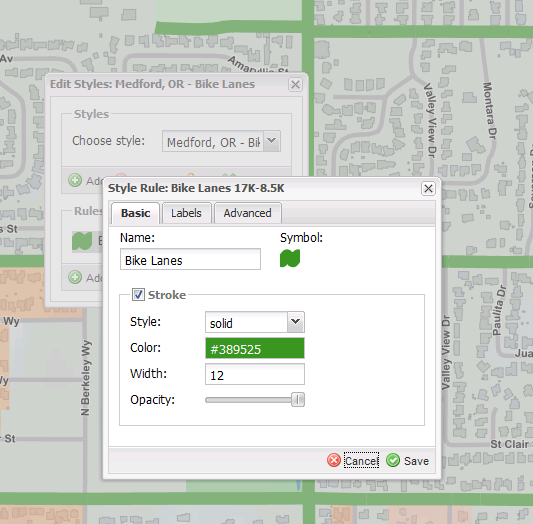
Styling and editing from inside GeoExplorer. While we still have the stand-alone Styler and GeoEditor applications, map composition is even easier now that all of their features are available right inside GeoExplorer. Edit GeoServer styles right from the layer properties, edit a feature’s attributes, or draw new features from the same web-based tool—no installation necessary.

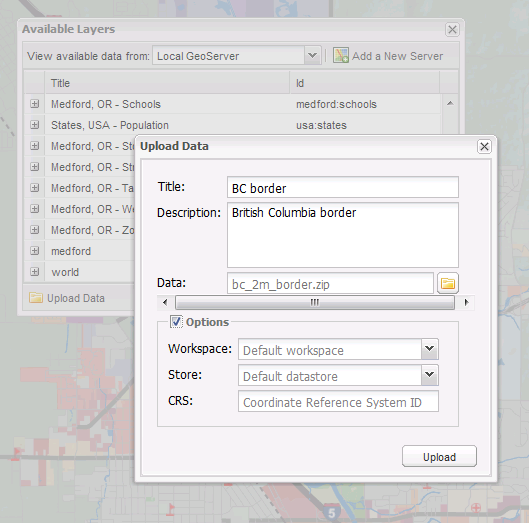
Upload data through GeoExplorer directly into GeoServer. This precisely mirrors the same process as our GeoServer layer importer, so your layers will be configured and loaded without needing to leave the application.

There are also plenty of other improvements since our previous Enterprise Edition was released. GeoServer has been upgraded to the latest release candidate of 2.1.0, which now includes WMS 1.3—the latest version of the Web Map Service standard so vital to INSPIRE compliance. GeoWebCache has been upgraded to 1.2.4 which includes new features for automatic management of tile storage, among other things. GeoExt has released a stable 1.0 API, so developers can build applications with confidence. And GeoExplorer has many new base layers to choose from, including MapQuest and Bing.

While on a longer release cycle than the Community Edition, the Enterprise Edition is the supported version of the OpenGeo Suite. As such, we ensure that the software is tested and working as it should across all the platforms we support. And of course, our Enterprise clients get unlimited bug fixes, upgrades, and much more. Why not try a free 30-day trial of the OpenGeo Suite Enterprise Edition and explore all of the features not yet available anywhere else?

GeoWebCache 1.2.4 released

Congratulations to the GeoWebCache development team on the release of GeoWebCache 1.2.4!

Although development has continued consistently, benefiting GeoServer users and those who downloaded nightly builds, it’s been almost a year since the previous release.

The new features since the last release are numerous, including a new disk quota module for automatic managing of tile storage. The disk quota prevents runaway disk usage, removes the need for manual truncation operations, and allows for multiple policies for determining how to remove tiles from the cache.

Also, GeoWebCache can now serve tiles from an ArcGIS Server tile cache, allowing a preexisting tile cache to be easily migrated to a fully standards-compliant web mapping stack without the need for re-creation. You now also have the ability to configure the service metadata for the capabilities document.

Finally, the documentation has received a much-needed update (with a nightly-updated version), the codebase has been refactored, and the source code migrated to git (hosted on GitHub).

Since GeoWebCache doesn’t get discussed very often, a little background might be in order. The tile cache server is the unsung hero of the geospatial software stack, performing its duties in a transparent way such that one doesn’t often notice it. This is a pity, since using GeoWebCache is an imperative in any production-ready web mapping system that utilizes Java. When you have hundreds of users requesting millions of tiles, GeoServer (and other robust servers running WMS) can handle that kind of load, but it makes no sense to do so. Since the data is often static, the requests are often duplicates. Since tiles are stored for later use, GeoWebCache eliminates the need for duplicate WMS processing. By placing GeoWebCache as a proxy in front of a WMS one can separate servers between public and private networks, increasing security as well as performance. In short, if you’re running GeoServer in production, you should be using a tile cache. Might we humbly recommend GeoWebCache for this purpose.

Thanks to Gabriel Roldan, Arne Kepp, Miles Jordan, and everyone else who has contributed to this new release.

OpenGeo Suite Community Edition 2.3.2 Released

opengeosuite-ce-240

We don’t let the holidays slow us down here at OpenGeo Suite HQ. Instead, we’ve released a new version of the OpenGeo Suite Community Edition, version 2.3.2. This is a minor update that brings a major feature along with it: GeoServer now supports WMS 1.3! This is definitely good news for our European friends (or anyone interested in INSPIRE compliance). We also updated GeoExplorer to be based against a stable version of Google Maps API, since Google has a habit of updating the API often, which can cause some unexpected behavior.

See more of what’s new and download this version today. Even if you’re already running the OpenGeo Suite Community Edition, it’s easy to upgrade. Just run the installer and it will take care of everything.

As usual, please report any bugs or oddities in the OpenGeo Suite Community Forum. Or just come say hello and maybe even share a story about your work and what you’ve done with the OpenGeo Suite. We’d love to hear from you.

OpenGeo Suite Community Edition 2.3.1 Released

opengeosuite-ce-240

Less than three weeks after the release of 2.3.0, we now have the OpenGeo Suite Community Edition 2.3.1. This release solves a few performance and stability issues, so we recommend that you upgrade to this latest version. There are also several new features. For instance, you can now specify the GeoExplorer data directory as an init parameter, in case you wish to locate your GeoExplorer database somewhere else. In addition, we have a new tutorial on adding editing capabilities to GeoExplorer, for those who want to dive under the hood a bit. We expect to share more customization details for GeoExplorer in the releases to come, so consider this just the start.

See more of what’s new, and download the Community Edition today. Remember, the OpenGeo Suite Community Edition is free (no charge and with full source code) but unsupported. If your organization wants to leverage the power of the full geospatial software stack backed by the developers who create and improve the software, you want the OpenGeo Suite Enterprise Edition.

Download the OpenGeo Suite Community Edition 2.3.1

OpenGeo Suite Community Edition 2.3.0 Released

The holiday season is upon us and OpenGeo is proud to announce the release of OpenGeo Suite Community Edition 2.3.0!

Our first Community Edition since this summer includes many updates, notably that the OpenGeo Suite now ships with the latest version of the GeoServer trunk. This adds features like Cascading WMS, Monitoring, and much more. As with most major version changes of GeoServer, changes to the data directory structure are not backwards forward compatible so, like all upgrades, we recommend making a backup of your data directory before upgrading. In addition, GeoExplorer now has a rewritten user guide that includes a tour through all features of the interface.

We encourage everyone to download the latest software. While the Community Editions are unsupported, questions and answers are available in our ever-growing OpenGeo Suite Community Forum. As always, your feedback, bug reports and feature requests will help make the software better for everyone.

Download the OpenGeo Suite Community Edition 2.3.0

OpenGeo Suite Enterprise Edition 2.2 released!

OpenGeo Suite Enterprise Edition 2.2

After four months of development, the OpenGeo Suite team is happy to announce the new OpenGeo Suite Enterprise Edition 2.2. In addition to performance improvements and increased stability this release includes a whole host of new features.

With major improvements to Styler and GeoExplorer—as well as enhanced versions of PostGIS, GeoServer, and GeoWebCache—the new OpenGeo Suite 2.2 enables users to quickly perform more complex styling and composition. Responding to user requests, this new version also introduces printing, improved raster support, the Google Maps v3 API, and an improved GeoWebCache to provide seamless configuration of layer groups and control flow.

The OpenGeo Suite is the premier enterprise geospatial software stack providing everything needed to create applications and serve data. Try it out with a free 30-day trial and gain access to a one-click installer. Setting up an enterprise-ready geospatial platform has never been this simple. In case you missed our various announcements, you can also run the OpenGeo Suite on the cloud using either Skygone’s GIS Marketplace or Amazon Web Services.

Wondering why you should become an OpenGeo Suite Enterprise Edition client? At OpenGeo, a not-for-profit social enterprise, our mission is to bring the innovation of open source software to the enterprise organization. Our integrated software package reduces the time and cost associated with creating, deploying and managing dynamic web maps. While our enterprise-level support—including unlimited bugfixes, upgrades, and core development—guarantees the stability necessary for production web services.

OpenGeo Suite 2.0 released

og-intro-eval

Since our first release of the OpenGeo Suite in January, our team has been working consistently to improve and refine the software. Much of this was based on feedback from our users, leading us to create a Community Forum where users can share their ideas and solutions. We have been periodically releasing a free Community Edition of the OpenGeo Suite, both as a testing environment for new features, and as a way for users to get the very latest in our technology.

Today, we release version 2.0 of the OpenGeo Suite Enterprise Edition. Here are just some of the many new features that comprise this software:

  • Fully integrated PostGIS, including the new pgShapeLoader, a graphical shapefile loading utility.
  • A new application, GeoEditor, that allows for web-based editing of geospatial features.
  • New code samples and recipes to help you design your own mapping applications.
  • Individualized packages of each application to integrate with an existing IT infrastructure.

And of course, all components are updated to the most recent stable version: PostGIS 1.5.1, GeoServer 2.0.2, GeoWebCache 1.2.2, and GeoExt 0.7.

With the OpenGeo Suite, you have all you need at your disposal to publish your data and maps on the web, as well as create virtually any web-based geospatial application for your organization. We hope that the new version 2.0 of the OpenGeo Suite will make your work even easier.

Register now to get your copy of the OpenGeo Suite 2.0. And please let us know what you think.

OpenGeo Suite installer

We want to make it as easy as possible for anyone to download and try out the OpenGeo Suite. A few months ago, we put together a LiveDisk, a bootable DVD image containing all of the software preconfigured. However, we recognize that a sandbox environment like that is only worthwhile as a first step. “That looks great,” I’ve heard, “but how do I get it on my machine?”

To this end, we have started work on the OpenGeo Suite Installer. This is an integrated package that installs and configures the OpenGeo Suite on your system. It makes the process of evaluating our software easy, within the familiarity of your own system.

We have a preliminary release available for you to try. The package contains the following:

  • GeoServer (plus documentation)
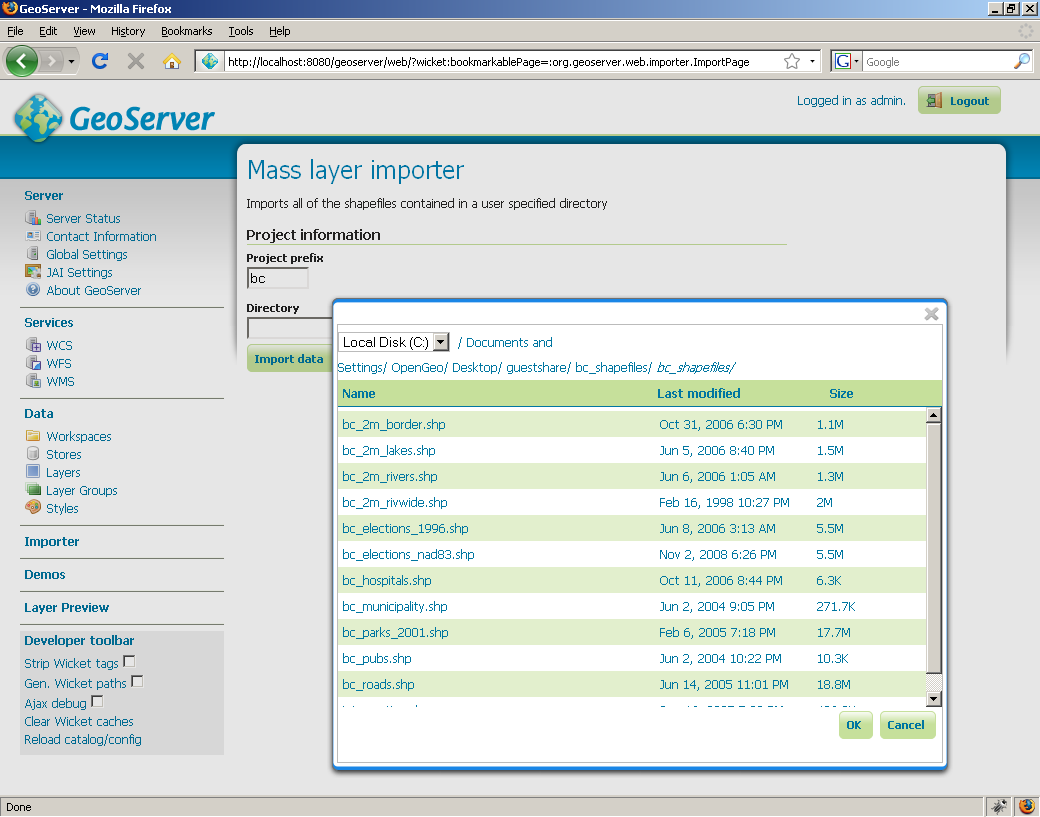
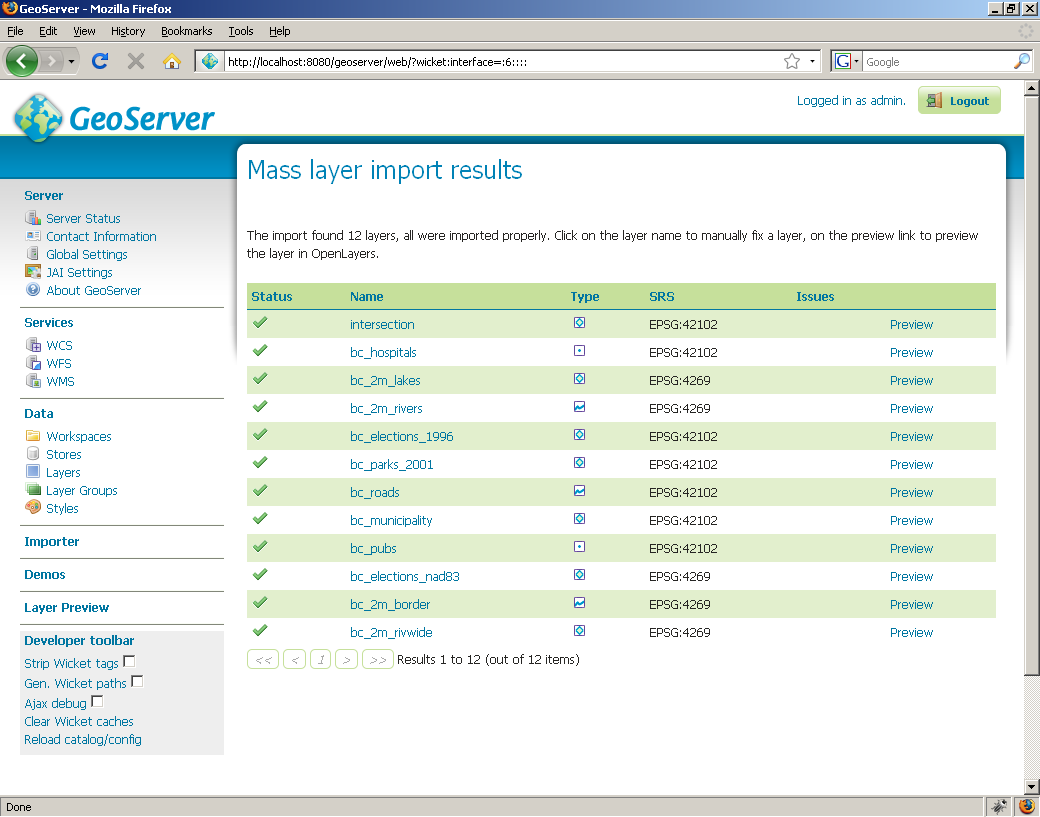
  • GeoServer Data Importer (an automated shapefile importer)
  • GeoExplorer (plus documentation)
  • Getting Started Guide

We have lots of plans for this project in the very near future, including integrated plugin support for GeoServer, GeoBuilder (which will combine graphical styling, map composition, and map export all in one), PostGIS support, and much else. Currently, the OpenGeo Suite installer is available for Windows only, but we anticipate adding support for other operating systems soon.