Blog

Posts Tagged ‘suite’

OpenGeo Suite Tour

Our flagship product, the OpenGeo Suite, is tailor-made for system administrators, web developers, and GIS analysts alike. Being many things to different people means that we get a lot of questions from those wondering if the software is right for their organization.

With this feedback, we’ve put together an OpenGeo Suite Tour designed to give you a feel for the product as a whole. In this tour, we hope it will show you how deployment can benefit your work, both in web-based GIS, interoperability with existing systems, the power of open source, and most of all, production-ready software.

Take the OpenGeo Suite Tour

OpenGeo Suite Enterprise Edition 2.4.0 released

March comes in like a lion with a new OpenGeo Suite Enterprise Edition release! Most exciting are the new features, including:

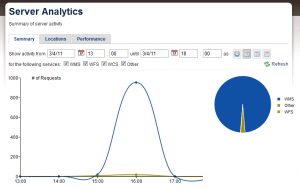
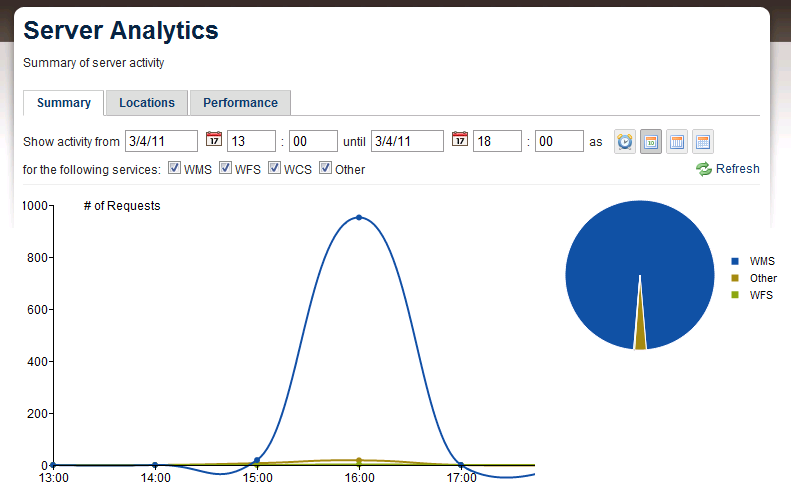
Suite Analytics, an interface that allows sysadmins to visualize and analyze server activity and performance. With this tool one can accurately measure traffic loads and use that information to properly configure and optimize server resources.
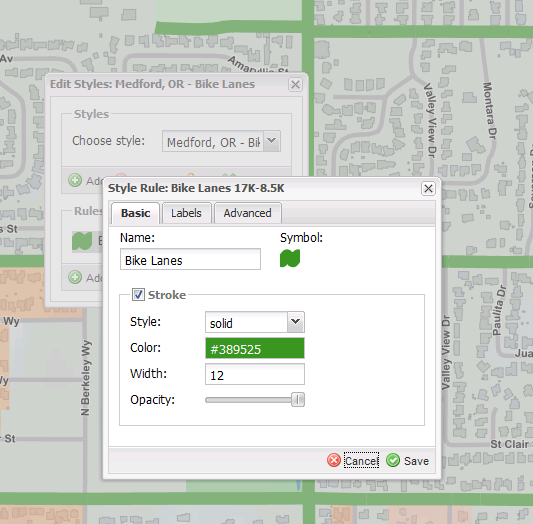
Styling and editing from inside GeoExplorer. While we still have the stand-alone Styler and GeoEditor applications, map composition is even easier now that all of their features are available right inside GeoExplorer. Edit GeoServer styles right from the layer properties, edit a feature’s attributes, or draw new features from the same web-based tool—no installation necessary.
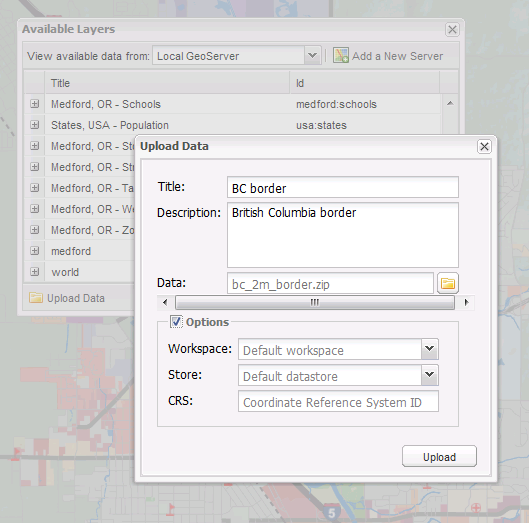
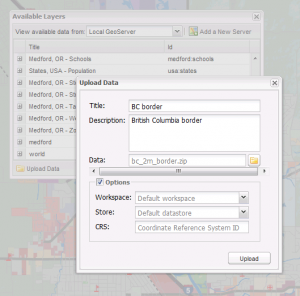
Upload data through GeoExplorer directly into GeoServer. This precisely mirrors the same process as our GeoServer layer importer, so your layers will be configured and loaded without needing to leave the application.
There are also plenty of other improvements since our previous Enterprise Edition was released. GeoServer has been upgraded to the latest release candidate of 2.1.0, which now includes WMS 1.3—the latest version of the Web Map Service standard so vital to INSPIRE compliance. GeoWebCache has been upgraded to 1.2.4 which includes new features for automatic management of tile storage, among other things. GeoExt has released a stable 1.0 API, so developers can build applications with confidence. And GeoExplorer has many new base layers to choose from, including MapQuest and Bing.

While on a longer release cycle than the Community Edition, the Enterprise Edition is the supported version of the OpenGeo Suite. As such, we ensure that the software is tested and working as it should across all the platforms we support. And of course, our Enterprise clients get unlimited bug fixes, upgrades, and much more. Why not try a free 30-day trial of the OpenGeo Suite Enterprise Edition and explore all of the features not yet available anywhere else?

OpenGeo Suite Community Edition 2.3.3, now with real Linux packages

We’re pleased to announce the first release of the new year: OpenGeo Suite Community Edition 2.3.3, complete with big fixes and improvements across all of the components.

GeoServer now comes enabled with integrated GeoWebCache caching, allowing for automatic caching with standard WMS but without the need for a separate endpoint. You’ll notice this most when using GeoExplorer, as the tiles you view will automatically be cached from here on out. We’ve also reenabled and improved the stability of the monitoring module to provide statistics about the OWS requests handled by the server.

We’ve added new base layers to GeoExplorer, including three new layers from Bing—the street map, aerial map, and aerial map with labels—as well as two layers from MapQuest—including imagery and a street map derived from OpenStreetMap.

But the most exciting news is the release of new ways of installing the OpenGeo Suite for Linux. In response to requests from Linux users seeking a way to better integrate the OpenGeo Suite with their existing infrastructure, we now have RPM and APT packages that can be installed with a simple yum or apt-get command. We recommend uninstalling previous installations prior to trying these new packages.

We are definitely looking for feedback on this new release, so please chime in on our OpenGeo Suite Community Forum to help us as we move towards our next release.

Download the OpenGeo Suite Community Edition 2.3.3

OpenGeo Suite Community Edition 2.3.2 Released

opengeosuite-ce-240

We don’t let the holidays slow us down here at OpenGeo Suite HQ. Instead, we’ve released a new version of the OpenGeo Suite Community Edition, version 2.3.2. This is a minor update that brings a major feature along with it: GeoServer now supports WMS 1.3! This is definitely good news for our European friends (or anyone interested in INSPIRE compliance). We also updated GeoExplorer to be based against a stable version of Google Maps API, since Google has a habit of updating the API often, which can cause some unexpected behavior.

See more of what’s new and download this version today. Even if you’re already running the OpenGeo Suite Community Edition, it’s easy to upgrade. Just run the installer and it will take care of everything.

As usual, please report any bugs or oddities in the OpenGeo Suite Community Forum. Or just come say hello and maybe even share a story about your work and what you’ve done with the OpenGeo Suite. We’d love to hear from you.

OpenGeo Suite Community Edition 2.3.0 Released

The holiday season is upon us and OpenGeo is proud to announce the release of OpenGeo Suite Community Edition 2.3.0!

Our first Community Edition since this summer includes many updates, notably that the OpenGeo Suite now ships with the latest version of the GeoServer trunk. This adds features like Cascading WMS, Monitoring, and much more. As with most major version changes of GeoServer, changes to the data directory structure are not backwards forward compatible so, like all upgrades, we recommend making a backup of your data directory before upgrading. In addition, GeoExplorer now has a rewritten user guide that includes a tour through all features of the interface.

We encourage everyone to download the latest software. While the Community Editions are unsupported, questions and answers are available in our ever-growing OpenGeo Suite Community Forum. As always, your feedback, bug reports and feature requests will help make the software better for everyone.

Download the OpenGeo Suite Community Edition 2.3.0

FOSS4G.jp Talks

Last week I was in Japan, attending the FOSS4G.JP events put on by OSGeo Japan in Tokyo and Osaka. The enthusiasm of the local community was infectious, as was the FOSS4G montage.

In Tokyo, I presented my talk on open source economics, “Beyond Nerds Bearing Gifts“; in Osaka, the more technical “State of PostGIS“.

One thing that the experience made clear to me was the need to press forward with localizing the OpenGeo Suite so that our local partners (Orkney and MapConcierge) can more easily evangelize. English is nice as a universal language of commerce, but when it’s time to learn and build, you have to meet people where they live and in their own language.

Our First Reseller

Not as exciting as our first kiss, but still pretty exciting: our first OpenGeo re-seller is Spatialytics in Quebec. That means that users of the OpenGeo Suite in Quebec will be able to receive front-line support from local staff who (importantly) speak French (with the right accent)!

We expect resellers to form the backbone of the ecosystem around the OpenGeo Suite. In a world with 40 time zones and hundreds of languages there is no way one organization can be everywhere. We want to focus as much of our internal effort as possible on improving the Suite, the core Suite projects, and the learning materials that go with them. Partners will be the bridge between our core team and customers around the world.

Welcome Spatialytics, to the OpenGeo family!

(Want to explore becoming a re-seller? Drop us a line, inquiry at opengeo dot org.)

Market Sandwich

When describing the OpenGeo Suite, I am often asked one of two questions (depending on who I am talking to): “why not just use ESRI” or “why not just use Google”.

The answer to the first question depends on the person asking, ranging from the “ability to economically scale out to larger user loads” to more managerial things like “having multi-vendor options and flexibility in tool choice”.

The answer to the second question is was the subject of a recent article in Ovum, which notes:

The key exposures for agencies using the free map platforms relate to some natural consequences of the services being provided for free. These include:

  • lack of assurances regarding the continuous provision or reliability of the service or that it will remain available for free in the future
  • lack of control over the content displayed by the vendors on the platform - particularly advertisements
  • lack of control over how the vendors use data that is provided by agencies
  • the requirement to indemnify the vendors from any claims arising from the agency’s use of the service.

The market runs from the cloud-based web services (Google, Bing) through to self-managed proprietary (ESRI), and there is a gap in the middle where customers need the flexibility and scalability of the consumer services married with the feature richness and control of self-managed software.

And that gap, in the middle of the “market sandwich”, is where we plant our flag.

A Time to Sell

OpenGeo is in the market for people who know the market… specifically a Director of Marketing and a Sales Executive. Over the past year we have thought a lot about what it means to build a business on open source, and created a product which we think is a useful addition to the geospatial world.

But we don’t want to throw a party and have nobody show up! So we need to get the word out, beyond the fairly small population of people who might read a blog post like this one, out to the many developers and organizations who are building geospatial applications. The Director of Marketing will be focused on generating leads and building a system for qualifying those leads as efficiently as possible. The Sales Executive will help to turn those leads into sales, hunt for new leads, and assist us in fielding our current opportunities more efficiently.

If you know someone, or are someone, who wants to be a part of a social enterprise devoted to making open source geospatial tools widely available and used, we hope to talk to you soon!

OpenGeo @ Where 2.0

Update: We’re here! Look for Paul Ramsey and Sophia Parafina on stage at Ignite on Tuesday. Paul will also be at the OSGeo booth intermittently throughout the event!

I’m looking forward to this year’s Where 2.0 in San Jose coming up in three weeks! Where is always a different mix of folks from a usual GIS show, and the Silicon Valley vibe is something you can only get… well, in Silicon Valley. I am going to be teaching a workshop with Steve Citron-Pousty on the open source geospatial stack, using our own OpenGeo Suite for a big part of the software we show.

If you’re coming to Where 2.0 and want to talk about OpenGeo in general or PostGIS in particular, please let me know! Either drop me an email or hit my Where 2.0 profile.